Sonic Highs and Narrative Lows
***Note: This review contains spoilers.***
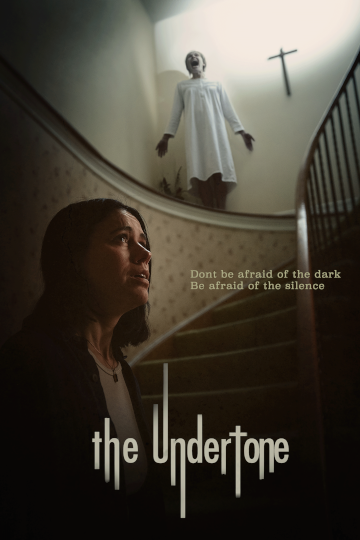
Undertone attempts to carve out a niche in the “analog horror” subgenre, relying heavily on the psychological weight of what is heard rather than what is seen.
Starring Isabella Wright as the isolated protagonist, the film leans on her ability to convey mounting hysteria while mostly tethered to a desk or going upstairs to check on her ailing mother. Wright delivers a physical performance that feels genuinely strained; you can see the sleep deprivation in her eyes. However, even her commitment can’t quite bridge the chasm left by a script that feels more like a rough outline than a finished haunting.
I didn’t enjoy this movie for a multitude of reasons. There were gaps in the story that we as an audience deserved to have filled. An example that comes to mind here is that they spoke about the protagonist going to a party, but we never got to see her at the party and it was skipped over. First gap.
Then the second gap is, for me, where they lost out on tremendous entertainment value by not having any identity of the podcast cohost she was speaking to. I would have loved for her to dash out to his house on the final act to find him with a plastic bag over his head deceased. The horror would have been so captivating. Then she could have ran back to her place to find her mother deeply possessed as she did.
The aspect that did work in this movie… and I’m sure everyone will agree … was the audio/sound mixing, which was deliciously immersive. Huge round of applause to Dane Kelly – sound mixer, David Gertsman – sound designer, and Jon Lawless – re-recording mixer and they will have so much work thrown at them after this. It was stunningly thrilling and immersive. If you take the sound mixing out of this movie, it drops from a 6 to a 3 out of 10.
For the true cinephiles tracking this production, it’s worth noting that the “immersive” quality of the audio wasn’t just a post-production trick; Director Mark Haddon reportedly insisted on using ambisonic microphones hidden within the walls of the set to capture authentic spatial depth, a technique rarely seen outside of high-budget VR projects.
Furthermore, a deep-cut trivia piece is that the “10 audio recordings” featured in the film actually contain hidden binaural beats designed to induce mild anxiety in the listener, a nod to the 1970s “sensory deprivation” horror experiments.
There was also significant terror created by the blocking in this film, whereby our protagonist sitting at the dining room table with her headphones would constantly keep looking over her right shoulder down the corridor into the black darkness of the night. Every time she did that I felt the hairs raise on my arms and upon my neck.
While these technical flourishes are impressive, they unfortunately act as a gold-plated frame around an overly minimal picture.
My very low rating is owing to the two gaps in storytelling that I mentioned above, and secondly, that we were left without answers. This is typical in a horror film, but this was an extreme case. There were hardly any answers and annoyingly so. They are significant plot holes that we are asked to fill on our own, judging by what the protagonist and her cohost unfurl while listening to the 10 audio recordings.
Ultimately, Undertone is a masterclass in technical execution that forgets to bring the “story” along for the ride. While the soundscape will likely earn the audio team awards and future contracts, the audience is left wandering through a narrative fog. It’s a film that demands you listen closely, but gives you very little worth hearing in the end.