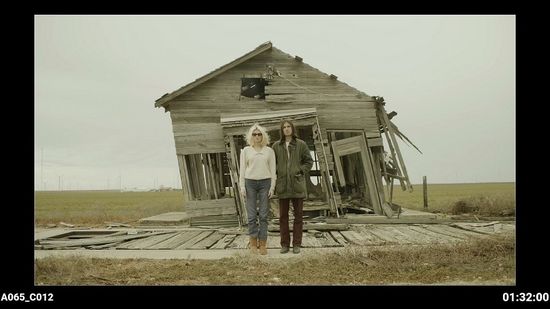
Premiering at the 2025 Austin Film Festival, Crystal Cross surprised me in the best way. On paper, it sounds like just another indie road movie—two strangers with baggage hitting the road—but Richie James Follin’s debut as writer, director, and star elevates that premise into something much more heartfelt. It’s a story of love, hope, and second chances, told with a musical rhythm that only a songwriter could bring to film.
Follin brings a musical sense of tone and timing directly into filmmaking. The dialogue flows like lyrics—rough, rhythmic, and sometimes jagged, but genuine. He plays James, a father on the edge, whose choice to drive across the country feels like both escape and surrender. Along the way, he meets Dotty, portrayed beautifully by Rubyrose Hill, a quirky Christian singer grappling with faith, career, and identity. Their connection isn’t romantic so much as soulful. These are two people broken in different ways, quietly trying to prevent each other from falling apart completely.
The film flows like a mixtape—funny at times, quietly heartbreaking at others. The original songs (written by Follin) fit perfectly with the story, each revealing something about the characters without the script needing to say it directly. Hill is not perfect, but she is stunning: authentic, funny, and almost impossible to look away from. Follin complements her with a subtle, grounded performance that carries real emotional weight.
What makes Crystal Cross so captivating is how much it achieves with so little. Made on a modest budget, the film still successfully depicts a cross-country trip that almost becomes a character—gas stations glowing in the middle of the night, roadside motels, and those seemingly endless stretches of highway where the sky feels infinite. Cinematographer Mauro Fernandez captures that sense of solitude and awe flawlessly.
The supporting cast—Luke Baines, Missi Pyle, Samantha Robinson ,and Austin’s own Lukas Haas—add bursts of color and humor to the journey, completing a world that feels lived-in and offbeat in all the right ways.
More than anything, Crystal Cross feels very personal. Follin’s background as a musician comes through, not as a gimmick, but as a vital part of the story. It’s a film about movement—physical, emotional, and spiritual—and about finding connection when faith, fame, and self-belief have all run out.
As an independent feature, it’s a strong showing—scrappy, soulful, and unexpectedly moving. Follin proves himself a filmmaker worth watching, and Hill’s performance lingers long after the credits roll. Like the best road trips, Crystal Cross isn’t about the destination; it’s about who you become along the way.