Having taught Shakespeare for thirty years, I approached Hamnet with both anticipation and caution. The life of William Shakespeare, as most scholars understand, can almost fit on a postage stamp—an extraordinary creative legacy paired with a frustratingly sparse historical record. So, when Chloé Zhao’s adaptation of Maggie O’Farrell’s acclaimed novel premiered, I knew I wasn’t watching biography; I was witnessing speculation wrapped in poetry. What surprised me, however, was how deeply it resonated.
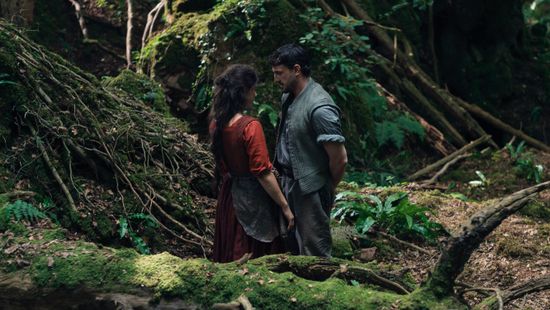
Zhao brings reflective beauty to Elizabethan England. The film is rich with textures—the soft crackle of candlelight, the clang of wooden shoes on stone floors, and the constant hum of nature that echoes the emotional heartbeat of the story. It focuses less on Shakespeare the playwright than on the people and emotions that may have influenced his art—especially his wife, Agnes (O’Farrell’s reimagining of Anne Hathaway), portrayed with stunning nuance by Jessie Buckley.
Buckley is truly exceptional here. She embodies Agnes as both a mystic and a mother, rooted in domestic life yet spiritually unbound. Her performance anchors the film with a timeless intensity. Paul Mescal, as Shakespeare, offers quiet intelligence and vulnerability, portraying a man torn between creative ambition and family love. Their chemistry is tender but shadowed by inevitability; love and loss are connected from the start. Young Zac Wishart, as Hamnet, provides the story with its heart, reminding us of what is truly at stake beneath the myth.
The film’s visual language is painterly—every frame looks like it could hang in a museum. The sets and costumes are stunningly detailed, yet Zhao avoids excessive spectacle. Her world feels authentic, not staged. The English countryside becomes its own character—lush, moody, and constantly shifting, much like Agnes herself.
What moved me the most was how Hamnet reimagines creation through grief. We know little about how Hamlet came to be, but Zhao and O’Farrell suggest that its emotional truth may have arisen from unspeakable loss. That idea—though speculative—feels deeply human.
It’s important to remember: Hamnet is based on a novel, not on documented fact. But in the gaps where history is silent, art steps in to imagine. And Zhao’s film, with its lyrical storytelling and deeply felt performances, does just that—filling the spaces with empathy rather than assumption.
Ultimately, I loved this film—a challenging task given the seemingly sub-freezing temperature in Austin’s State Theater. I appreciated how it dared to find tenderness in tragedy and how it celebrated the ordinary moments that could have given rise to greatness. Buckley’s performance is award-worthy—rich, layered, unforgettable—and the ensemble around her is just as strong. For those of us who have spent decades reading, teaching, and loving Shakespeare, Hamnet feels like a gift: not a history lesson, but a haunting and heartfelt act of imagination.