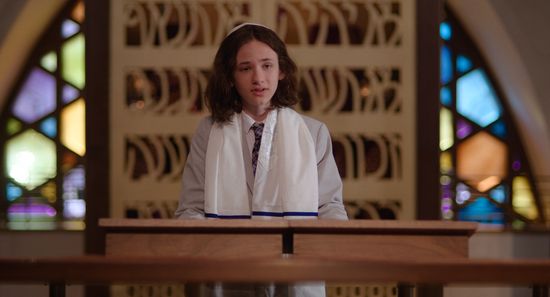
I had the pleasure of seeing Ethan Bloom at the 2025 Austin Film Festival, and it turned out to be one of those quiet surprises that sticks with viewers long after the credits roll. On the surface, it’s a modest coming-of-age film about a middle school boy grappling with faith, grief, and first love—but what writer Maylen Dominguez and director Herschel Faber achieve within that framework is far more meaningful. The story feels simple, even familiar, yet it carries the kind of emotional honesty and thematic depth that many bigger, flashier films miss.
Hank Greenspan stars as Ethan Bloom, a boy trying to understand a world that suddenly feels unstable after his mother’s death. He lives with his father, played by Joshua Malina, a man who clings tightly to structure and tradition to cope with his loss. That tension—between the father’s certainty and the son’s confusion—anchors the film. Rachelle Lefevre brings warmth and insight as Ethan’s rabbi, who gently encourages him to question rather than accept. At the same time, Carlos Ponce, as a Catholic priest and mentor, adds depth in a supporting role that helps expand the emotional world around Ethan.
What struck me most was how authentic the performances felt. Greenspan, in particular, delivers a layered, deeply human portrayal of a boy caught between childhood and adulthood. His vulnerability never seems forced, and his moments of anger and doubt feel genuine. Malina’s restrained performance as the father adds another layer—the pain of a parent who wants to guide but doesn’t always know how. Their dynamic feels natural and incredibly real.
Dominguez’s screenplay draws from personal experience, and that authenticity is evident. While religion and faith are at the surface of the narrative, the film primarily explores how to define belief—about God, love, and oneself—when old certainties no longer apply. Herschel Faber directs with a patient, understated approach, giving space for quiet moments to breathe. There’s no overt sermonizing, just the subtle ache of growing up and realizing that answers aren’t always straightforward. The story flows naturally, with each scene gently building on the last, creating an emotional rhythm that feels real and sincere. It’s imperfect, but it’s gratifying to see these characters develop so honestly before us.
In the end, Ethan Bloom is a gentle, moving film—one that respects the confusion of adolescence without looking down on it. It’s about a boy’s loss of innocence, yes, but also about the fragile beauty of trying to understand the world again: simple story, big heart, and a lasting impression.