I saw Chili Finger at its world premiere during SXSW 2026, and it’s one of those films that makes me laugh, wince, and then think a little longer than I expected. Directed by Edd Benda and Stephen Helstad, the movie takes a bizarre real-life premise and pushes it into dark, chaotic, and surprisingly thoughtful territory. The energy in the theater added to the experience, with the audience reacting audibly to both the humor and the more shocking moments. It felt like the kind of screening where it was apparent right away that the film would leave an impression.
The story follows Jessica Lipki, portrayed with sharp, uncomfortable precision by Judy Greer, who finds a severed human finger in her chili and chooses—rather than panic—to use it to her advantage. What unfolds is a blackmail scheme involving a regional fast-food empire run by the larger-than-life Blake Junior, played by John Goodman. Alongside her blissfully unaware husband Ron (Sean Astin), Jess spirals deeper into a situation that quickly gets out of her control, especially when a gritty investigator (Bryan Cranston) enters the scene. Supporting performances from Madeline Wise, Paul Stanko, and others enhance the cast and contribute to the film’s offbeat tone. Each character adds another layer of tension or absurdity, making the story feel increasingly unpredictable.
What really works here is the tone. The film embraces its absurdity but stays connected to reality. Even with some pretty wild—and sometimes violent—liberties, it remains grounded in something familiar. The mix of humor and discomfort is carefully balanced throughout. That tension is what keeps the film engaging from start to end.
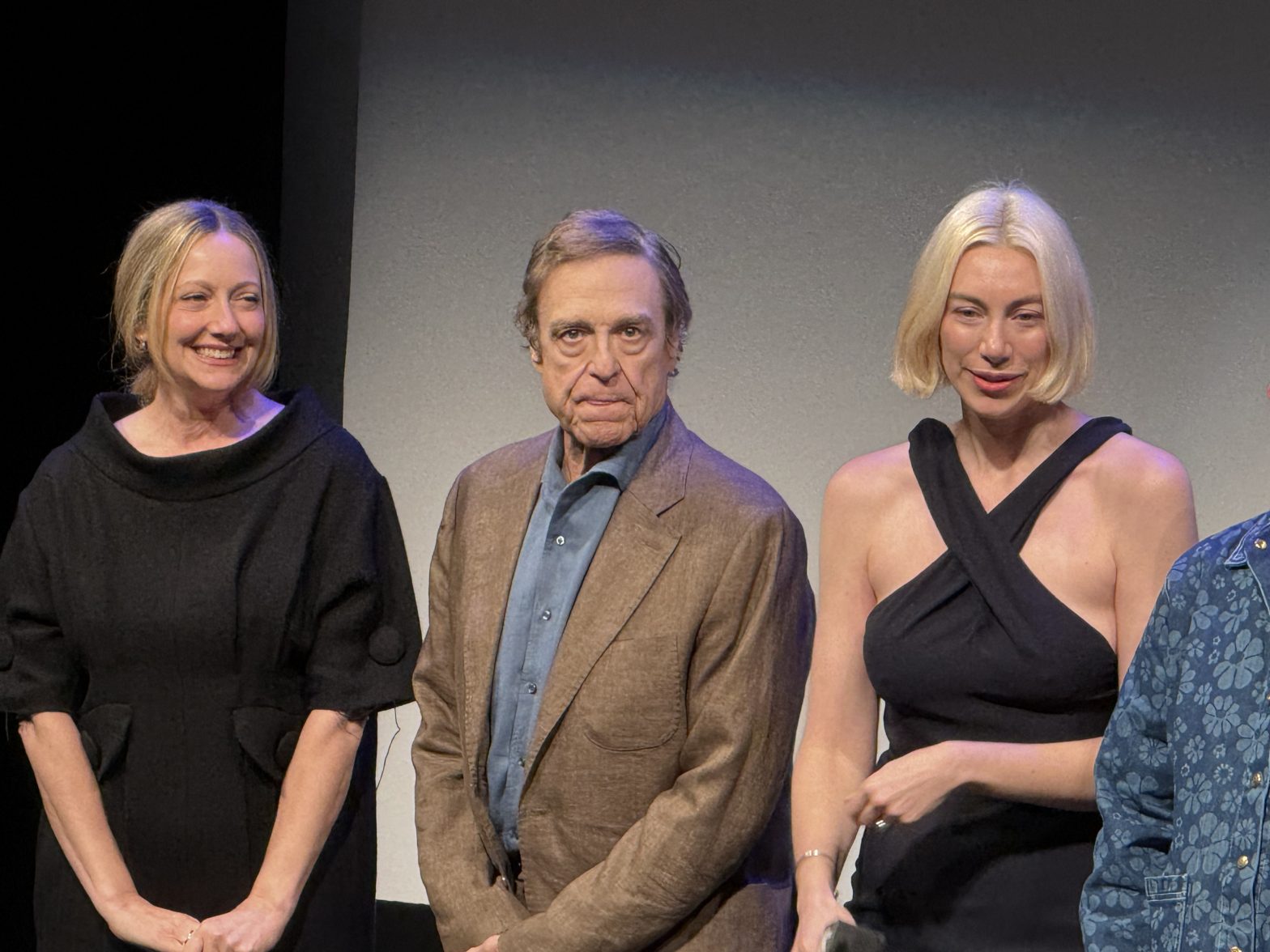
The Q&A added another layer to the experience. Seeing Greer and Goodman in person, along with members of the creative team, made it clear how intentionally this balance of dark humor and discomfort was crafted. You can feel that in the performances—especially Greer’s, which walks a fine line between sympathetic and deeply unsettling. Hearing the filmmakers discuss the real-life inspiration made the story feel even more surreal. It underscored how far the film stretches reality for effect.
At its core, Chili Finger examines something very real: the litigious, opportunistic culture we live in and how quickly a bad situation can turn into a calculated move. It raises uncomfortable questions about accountability, morality, and how far someone might go when they believe they’ve found a way out. The film doesn’t offer easy answers, which causes those questions to linger. That lingering effect is part of what gives the film its edge.
It’s not a perfect film, and it doesn’t aim to be. But it is bold, strange, and undeniably fun—and it lingers longer than you’d expect from a movie about a finger in a bowl of chili. It embraces its odd premise without hesitation. That willingness to go all out is what ultimately makes it memorable.