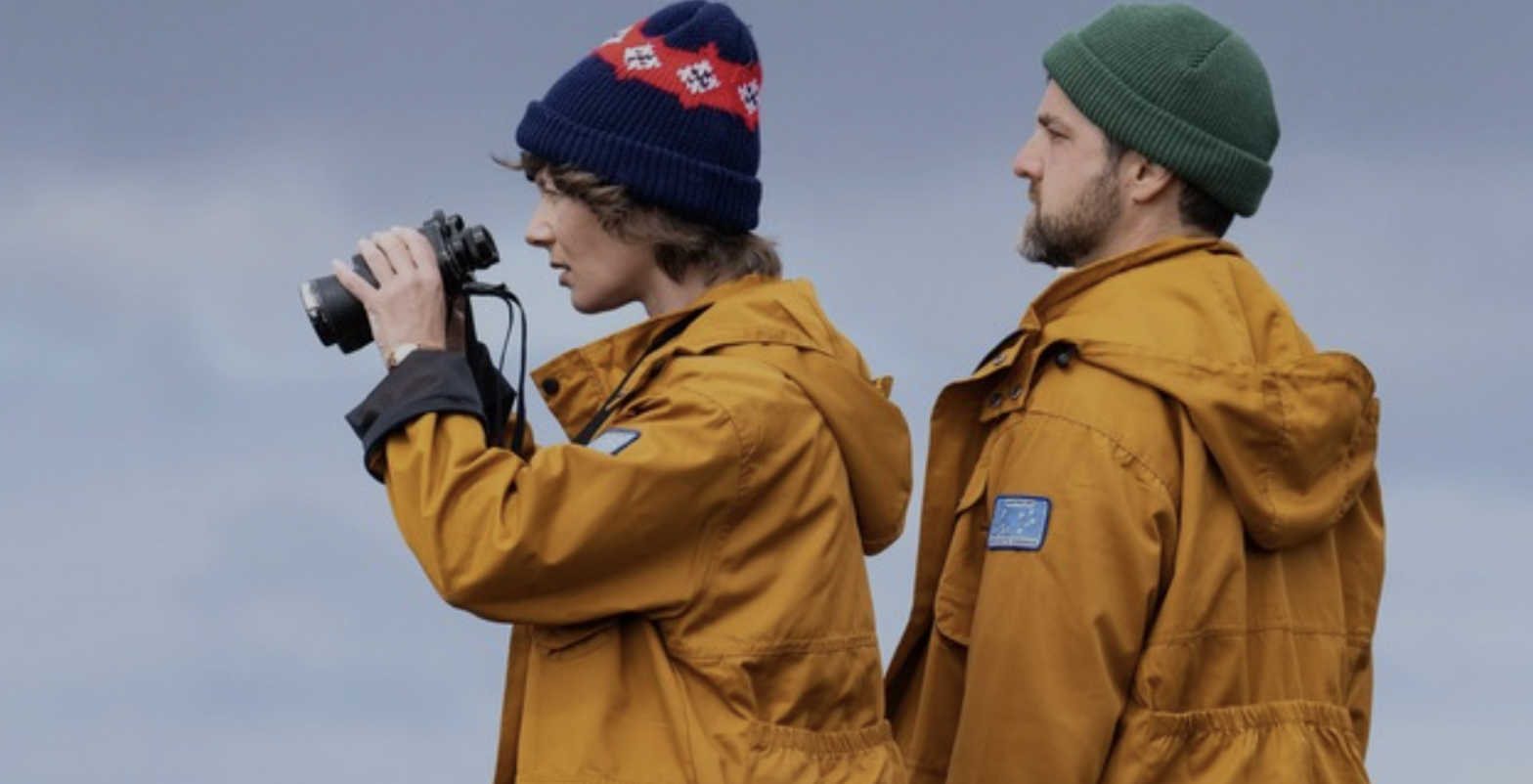
Screening at this year’s Austin Film Festival, Yesterday Island starts with something as simple as a midnight phone call. It gradually moves into more unusual territory—a darkly comic tale about failure, self-deception, and being both physically and emotionally stranded. Writer-director Sam Voutas brings his offbeat style to the story, although this one feels more focused, both in setting and scope.
The film, which won an audience award at the festival, follows Amos (Ivan Aristeguieta), a struggling writer, as he tries to help an old friend, leaving him stranded on a surreal subantarctic island where time, truth, and sanity seem to blend together. It’s a premise full of potential but also somewhat familiar—another story of a man facing himself in isolation, caught between absurdity and revelation. While the tale has moments of intrigue and flashes of wit, it doesn’t fully escape the weight of its own setup. Still, its mood and pacing have a way of drawing you in despite occasional frustration.
The sense of claustrophobia is skillfully conveyed. Even in the island’s vast, icy spaces, Voutas makes the world feel close and suffocating—mirroring Amos’s growing unease and self-doubt. The cinematography emphasizes the bleakness, and the sound design, filled with wind and tense silences, heightens that feeling of being trapped until you’re right there with him, searching for meaning.
Aristeguieta, best known for his work as a stand-up comedian, delivers a surprisingly grounded and introspective performance. His natural timing adds dry humor to even the most desperate moments, keeping the film’s darker edges from becoming too heavy. The supporting cast—especially Florence Noble and Genevieve Neve—adds depth to Amos’s strange encounters, with their characters serving as mirrors and foils in his slow unraveling.
While Yesterday Island doesn’t fully reinvent the “man in exile” story, it functions well as a mood piece—unsettling, introspective, and occasionally darkly humorous. It’s not a film that impresses visually, but it leaves an impression. For me, it was an uneven but decent viewing experience—sometimes tedious, sometimes striking, but always engaging enough to keep me watching.