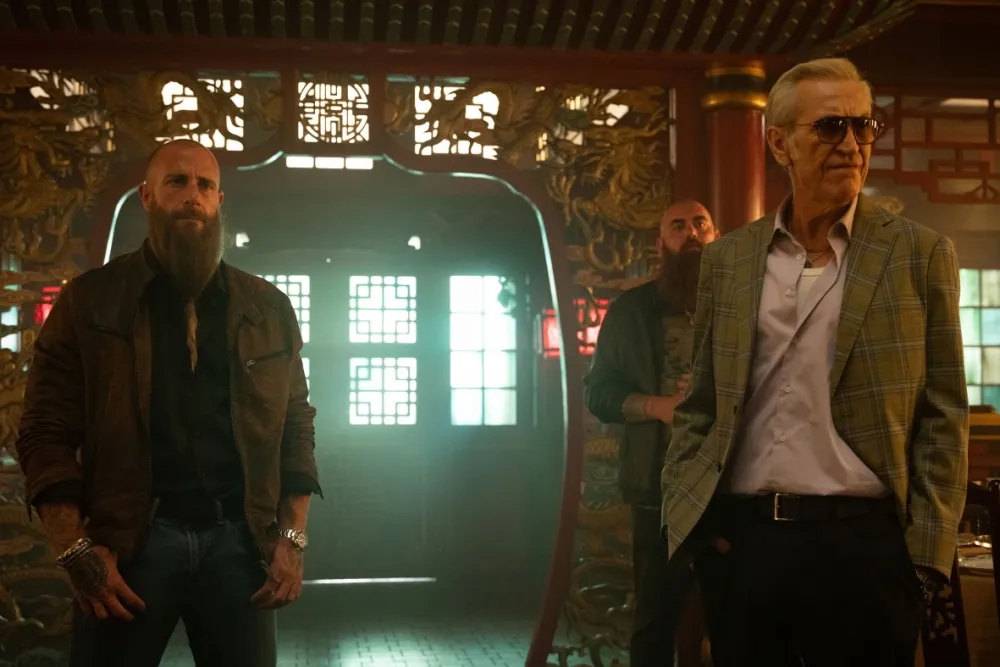
Gabriele Mainetti’s The Forbidden City was one of the most distinctive films I saw at this year’s Fantastic Fest, a sharp and confident entry that blends multiple genres into something strikingly original. Best described as a “spaghetti martial arts” film, it combines the choreography and intensity of classic kung fu cinema with the grit and atmosphere of Italian crime dramas. The result is a film that is engaging from start to finish, with a story that moves swiftly but never feels rushed.
At its heart, The Forbidden City is a tightly focused narrative about Mei, a Chinese immigrant determined to find her missing sister. Her search leads her to a popular Chinese restaurant in the center of Rome, which doubles as a front for a sex-trafficking operation. From there, Mei is drawn into a dangerous world that demands she fight her way through layers of corruption and criminality. The film balances its action and dramatic beats with care, offering moments of quiet tension between its brutal and inventive fight sequences. There is even a touch of mystery and romance, which adds depth and dimension to Mei’s journey and keeps the audience invested beyond the action.
Mainetti’s direction is controlled and deliberate. He builds tension gradually, allowing the audience to take in the environment and feel the stakes before unleashing the action. The cinematography makes excellent use of Rome’s visual contrasts, shifting from warm, open exteriors to the claustrophobic interiors of kitchens and back rooms where much of the combat takes place. These choices give the film a distinct sense of place and ground its more heightened moments in a believable reality.
Yaxi Liu, stepping into her first leading role after years as a stunt performer, delivers a performance that is both physically impressive and emotionally compelling. Her fight work is athletic and inventive, using whatever is within reach — kitchen knives, rolling pins, boiling pots — to dismantle her opponents. Just as importantly, she conveys Mei’s determination and fear without overplaying them, making the character someone we root for from the beginning. Marcello, the Italian chef who reluctantly joins her quest, is played with restraint and provides moments of understated humor and humanity that never undermine the gravity of the story.
The Forbidden City succeeds as both a gripping revenge story and an inventive action film. Its blend of genres feels purposeful rather than gimmicky, and its pacing keeps the audience engaged without exhausting them. This is the kind of film that reminds festival audiences why they seek out fresh voices and unexpected combinations — and why Mainetti is a director to watch.