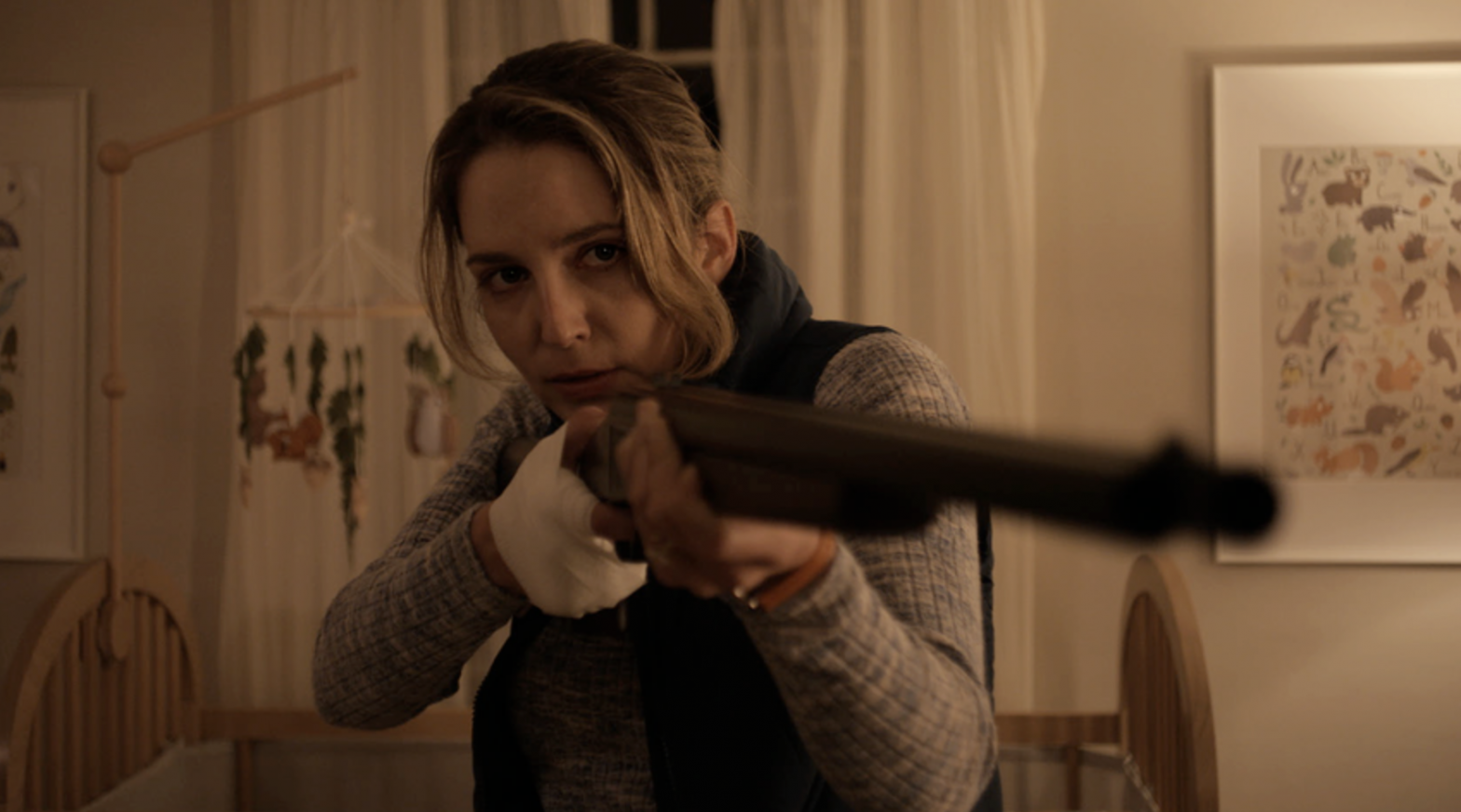
Imposters is one of those films where I can understand why it resonated with many people, even if it didn’t fully work for me. Written and directed by Caleb Phillips, the film begins with a jarring, unsettling sequence that immediately pulls you in and establishes a dark tone. It signals right away that this isn’t going to be a straightforward story, and for a while, that sense of unease works very well. There’s confidence in how it starts, and it definitely makes you curious about where it’s going.
The central story—about a couple whose baby disappears and the desperate efforts one of them makes to retrieve him—is strong in concept. It explores themes of grief, guilt, and second chances in a way that feels genuinely engaging. Jessica Rothe carries much of that weight as Marie, delivering a raw and committed performance. Charlie Barnett portrays Paul with an emotional distance that suits the character, even if it makes him harder to connect with. Moments between them feel tense and authentic, clearly showing the film’s attempt to examine how fragile their relationship was before everything unraveled.
Some parts of the film feel uneven. There are moments when the pacing slows, making it harder to stay engaged, and certain sequences don’t carry the emotional weight they seem to aim for. Some structural choices, especially in how key events are presented, create distance rather than drawing the viewer in. It doesn’t completely lose its footing, but it makes the overall experience feel inconsistent, particularly in the middle sections.
My perspective shifted significantly in the final act, and the core explanation behind what’s happening. Without getting into specifics, the direction the film takes didn’t sit as well with me as it clearly did with others in the audience at SXSW 2026. There’s an ambition there, and I respect what it’s trying to do, but the execution didn’t feel as satisfying as the buildup suggested it might be. It’s one of those endings that works better in theory than in practice, at least from my point of view.
What stays with me isn’t so much the resolution as the feeling that the film is reaching for something more complex than it ultimately delivers. It explores ideas about identity, consequences, and whether people can truly change or just repeat the same patterns in different ways, but these ideas never fully cohere. Instead of clarifying those themes, the film disperses them, leaving too much to implication without enough clarity to make it resonate. The lasting impression is less about what the film accomplishes and more about what it nearly becomes, which creates a sense of frustration. There’s talent here and moments that suggest something stronger, but it feels like a film that falls just short of uniting its ideas into something truly cohesive or impactful.