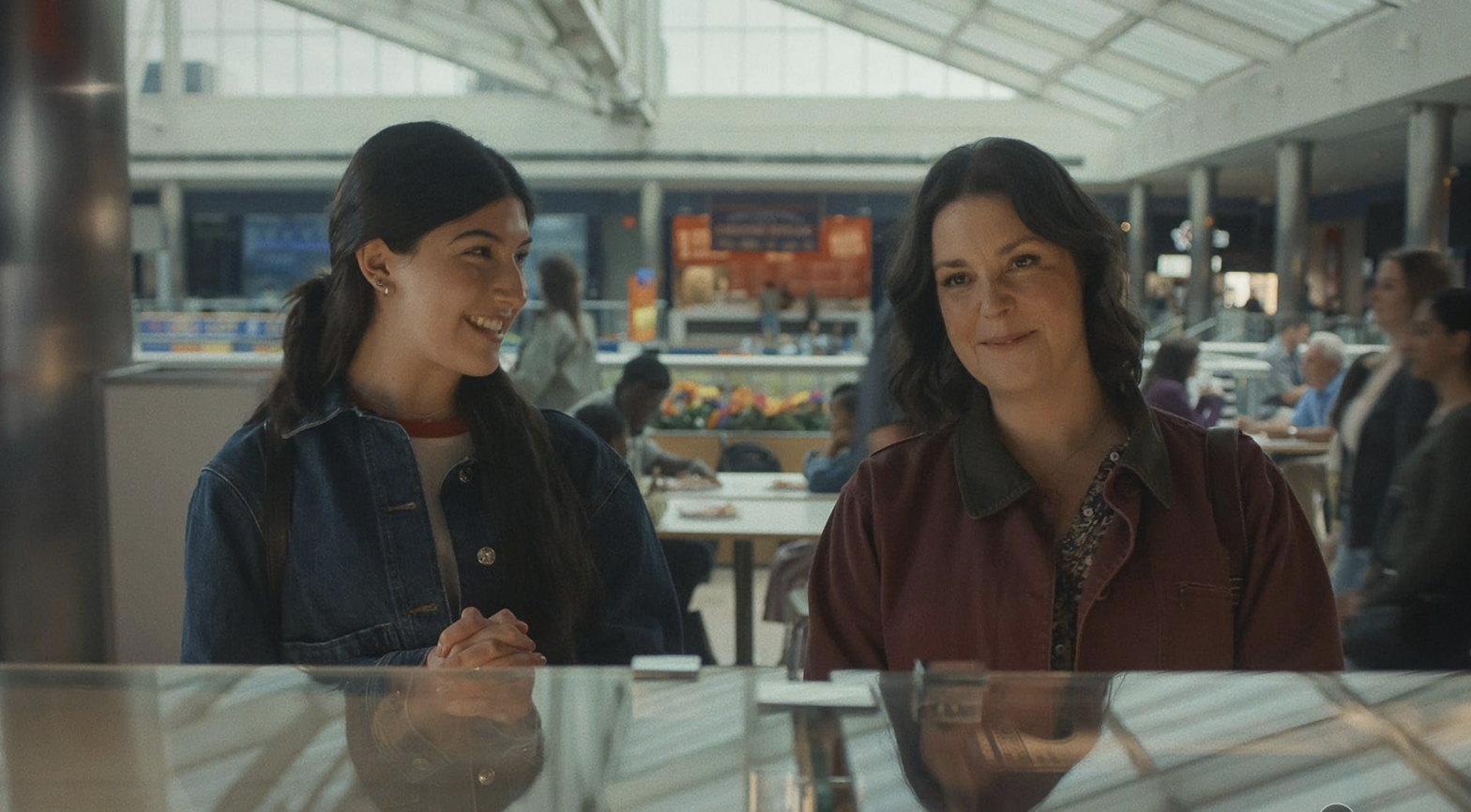
Don’t Say Good Luck, directed by Julia Hart and now streaming on Netflix, could have been another familiar coming-of-age story, but it is far more thoughtful. The film tackles real pain, complicated relationships, grief, family dynamics, and the uncomfortable process of growing up while someone you love is dying.
Sophie attempts to navigate adolescence while grappling with the devastating reality that her mother has cancer and is dying. That gives the film an emotional gravity that immediately sets it apart from the usual high-school story. Her friendships, family relationships, and even her involvement in the school production of Waitress are shaped by that looming loss.
Sunny Sandler is exceptional. She delivers a performance that feels natural, vulnerable, and remarkably assured, handling both the film’s humor and its heavier emotional moments with ease. Nothing about her work here feels forced. Sandler sings, dances, and delivers an emotionally rich performance that will stick with me. She makes Sophie feel like an actual teenager rather than an adult’s idea of one, proving herself a genuinely talented young actress.
The ensemble cast shines around her, including Melanie Lynskey, Max Greenfield, Jack Champion, Stephanie Beatriz, Scarlett Estevez, Jon Lovitz, Bebe Neuwirth, and Steve Buscemi. Rather than merely moving Sophie through the story, the people in her life have their own hurts, shortcomings, and emotional baggage. Those relationships give the film much of its power. Lynskey, in particular, brings warmth and heartbreaking authenticity to Sophie’s mother.
While I was skeptical at first, the high school production of Waitress fits the story well. It is an unusually mature musical for teenagers to tackle, dealing with abuse, pregnancy, infidelity, and the longing for a different life. But Hart blends it in perfectly. Rather than mirroring Sophie’s situation directly, the production adds another layer of emotional complexity to the film. It provides a believable backdrop for the friendships, tensions, and growing pains unfolding around her.
What I appreciate most about Don’t Say Good Luck is that it doesn’t trivialize teenage pain. Sophie is confronting something no teenager should have to face: her mother’s impending death. At the same time, life does not stop around her. There are friendships, crushes, rehearsals, arguments, awkward moments, and ordinary teenage concerns. The film understands that grief and everyday life can coexist.
Warm, funny, painful, and surprisingly perceptive, Don’t Say Good Luck rises well above the standard coming-of-age movie. Sandler is a revelation, the ensemble is terrific, and beneath its youthful setting lies a story about love, loss, and the painful realization that sometimes growing up means learning to say goodbye. Watch it now on Netflix.