Fantastic Fest 2026
The Blood Countess has enough color, costuming, and elaborate scenery to keep the eyes occupied long after the story should have wrapped up. At Fantastic Fest, I admired its visual extravagance while wishing someone had edited it more firmly. This peculiar vampire comedy offers plenty to appreciate, including a solid cast and an amusingly theatrical sensibility. Unfortunately, even immortality has a running-time limit.
Ulrike Ottinger, who co-wrote the screenplay with Elfriede Jelinek, directs the film, which follows Countess Elizabeth Báthory (Isabelle Huppert) as she awakens from a long slumber and travels through Vienna with her devoted maid, Hermine (Birgit Minichmayr). Their quest centers on the red elixir of life and a dangerous book that could threaten the vampire world. Complicating matters are a vegetarian nephew, his psychotherapist, vampire scholars, and a police inspector. The cast is appropriately eccentric for a story that treats supernatural affairs with such elaborate ceremony.
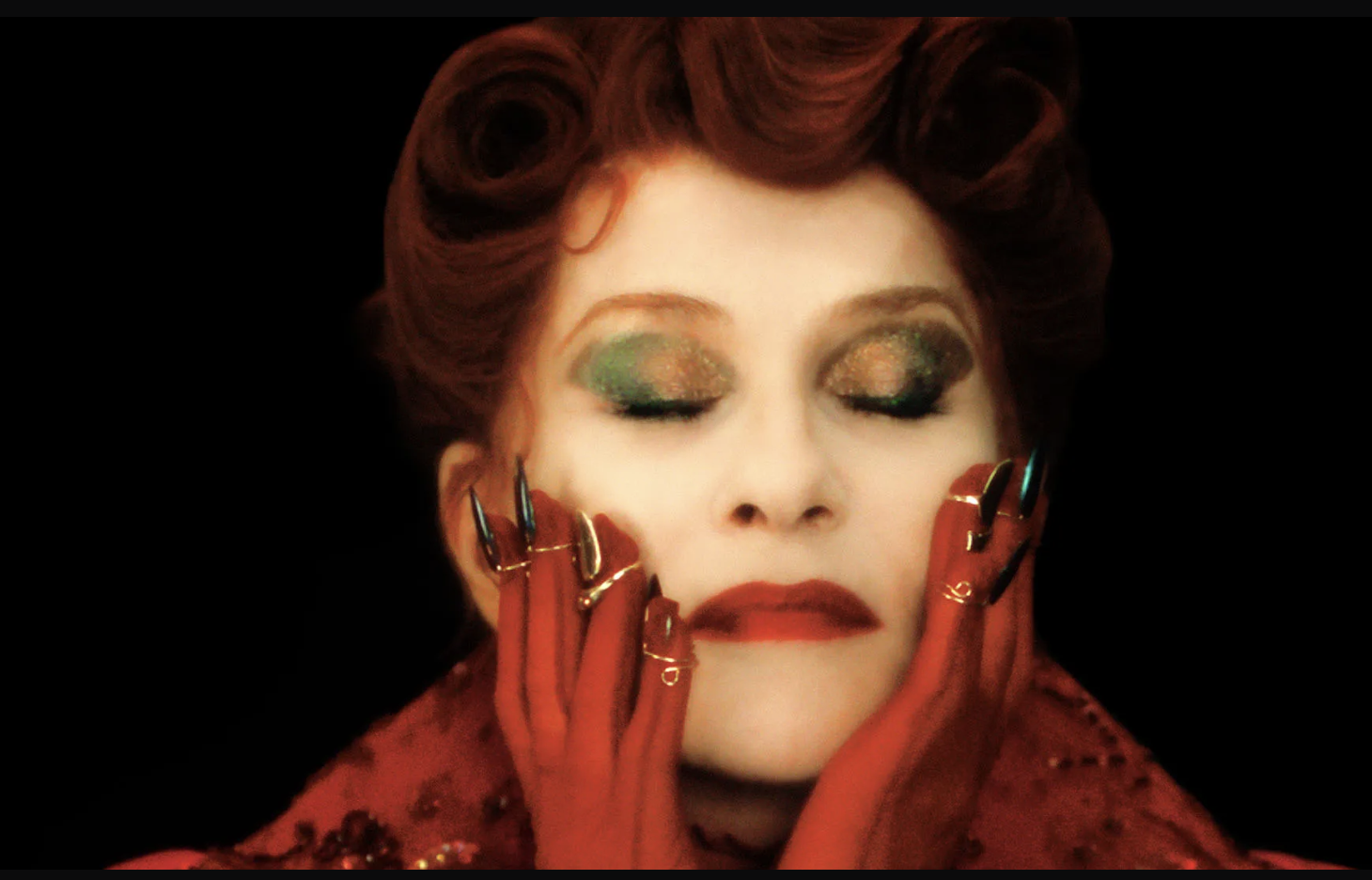
Huppert fits comfortably into this world, giving the countess a presence that suits the production’s extravagance. Minichmayr makes a strong companion, and the supporting ensemble, including Thomas Schubert and Lars Eidinger, contributes to the film’s distinctive rhythm. The performances share an entertaining contradiction: everyone takes the material seriously while also recognizing exactly how ridiculous it is. That balance gives the comedy much of its charm, allowing the absurdity to emerge without any performer pausing to announce the joke.
The visual design is the strongest reason to stick with it. Vivid colors, elaborate costumes, and stunning sets and locations give The Blood Countess the look of an old-school vampire movie dressed for a particularly extravagant occasion. The presentation has a theatrical quality that suits its aristocratic supernatural world. Even when my interest in the narrative wandered, something on screen usually pulled my attention back.
That campiness also gives the film a distinctive personality. Its characters seem perfectly at home amid the excess, carrying on as though their strange concerns demand the utmost dignity. I enjoyed that committed silliness, especially when the cast let an absurd situation speak for itself. The film often works better as a collection of personalities, costumes, and odd encounters than as a story moving toward a satisfying destination.
The trouble is how long Ottinger asks those pleasures to sustain the experience. The narrative has an assortment of moving parts, but they don’t always build momentum. As the film continues, the visual richness becomes more dependable than the storytelling, and the novelty begins to wear thin. I wanted a tighter version that preserved the eccentricity while giving its best moments more room to stand out.
The Blood Countess is never dull to look at, but that doesn’t mean it’s consistently engaging. Its cast, lavish design, and unusual humor give it considerable appeal, particularly for anyone drawn to theatrical vampire camp. For me, those strengths were held back by a film that lingered too long in its own elaborate world. I appreciated the spectacle; I simply wished the countess had concluded her business a little sooner.