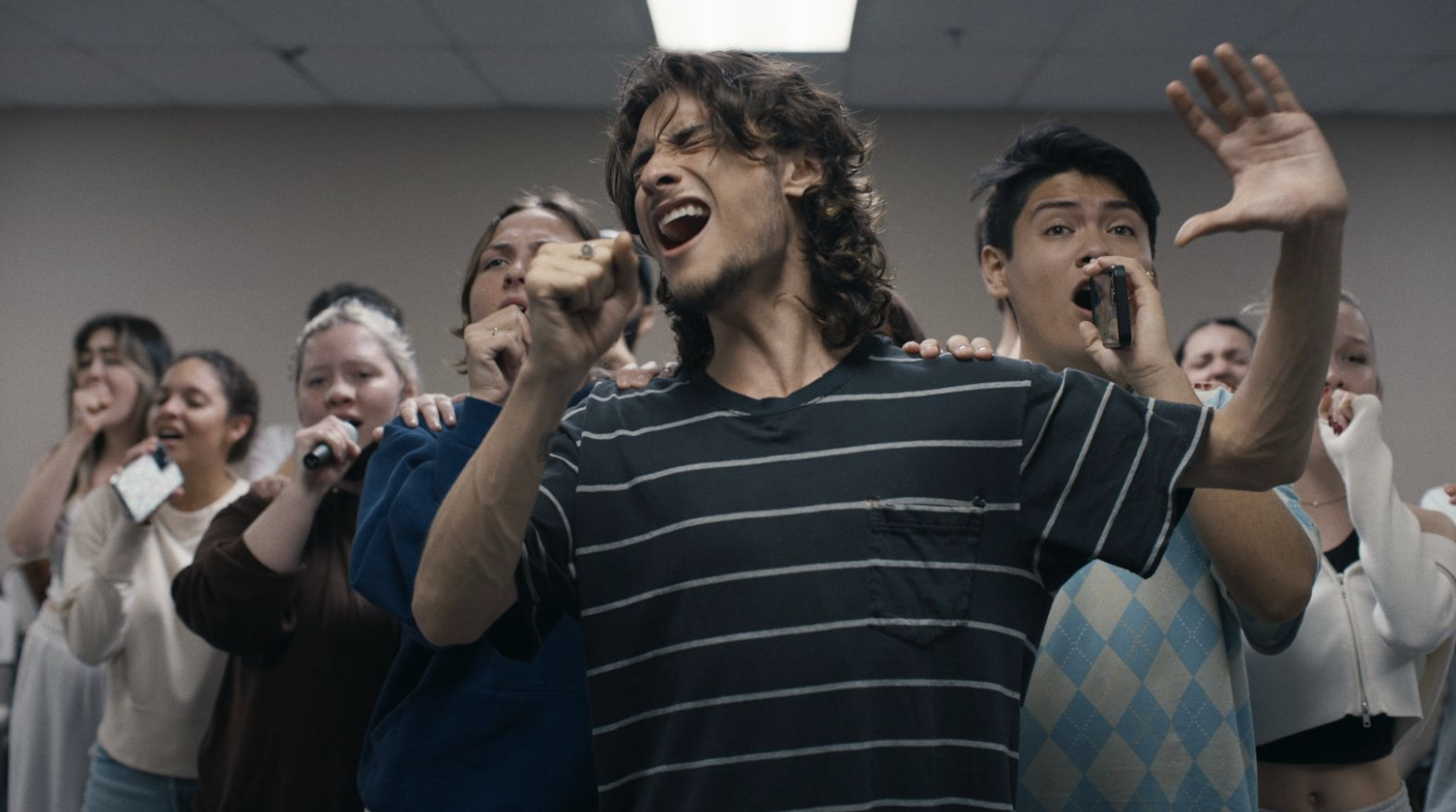
Just Sing (Dirs. Abraham Troen & Angelique Molina) opens in theaters on April 24 and unfolds as a quietly engaging documentary that favors connection over competition. The film settles into its rhythm early and well, and never feels rushed or overly contrived. Instead, it allows moments to breathe, giving the material a natural and unforced quality.
The documentary follows the SoCal VoCals of USC as they prepare for the International Championship of Collegiate A Cappella. While the premise suggests a familiar competitive arc, I appreciated how the film resists that structure in favor of something more intimate. The focus remains firmly on the group rather than on rankings or rivalries.
That choice proves to be one of the film’s strongest elements. By narrowing its lens, Just Sing creates a sense of closeness that mirrors the nature of a cappella performance. There is no distraction from instrumentation, and the film likewise avoids unnecessary narrative noise.
Rehearsals, performances, and interviews are presented in a quiet, observational style that lets personalities emerge gradually. The absence of heavy-handed editing or manufactured drama works in the film’s favor. It creates space for authenticity, which becomes increasingly important as the documentary unfolds. Because of my love for this kind of music and its potential to motivate and entertain, I felt a connection, even though I am not a singer.
The time spent getting to know the individual performers and their families adds meaningful depth. These glimpses into their personal lives ground the film and give the performances emotional context. I especially enjoyed getting to know these individuals beyond the stage, and I found that those moments give the film its heart.
Ambition is a constant thread, but it is balanced by the realities each performer faces. Financial pressures, family dynamics, and personal struggles all find their way into the narrative without feeling forced. These elements make the group’s shared goal feel more immediate and human.
The musical performances themselves carry a sincerity that feels earned rather than staged. Stripped of instrumentation, the voices take on heightened emotional clarity. Having grown up with a mother who loved to sing and shared her love of musicals and a cappella groups, I found these moments especially resonant. When the group engages with material that carries broader cultural or emotional weight, the impact is especially strong.
There is a slight trade-off in the film’s narrow focus. Without a clearer view of competing groups, the stakes of the competition can feel abstract at times. Even so, I felt the investment in character ultimately outweighed the lack of a more traditional competitive framework.
In the end, Just Sing works best as a portrait rather than a contest. It captures a moment in time for a group of young performers as they navigate ambition, identity, and connection through music. Ultimately, the film leaves a lasting impression not because of who wins, but because of who these singers are and what this experience means to them.